Showing posts with label spring produce. Show all posts

Wednesday, June 16, 2010

Qu'est-ce Que C'est Dans Ma Boite De CSA? Greens, Garlic Scapes, Spring Garlic, Radishes, Spearmint, and Bok Choy

My first week of CSA membership did not go as smoothly as hoped. Like so many overblown culinary ambitions -- the croquembouche I thought I'd "throw together" for a holiday party, my first naive tries at salt-roasted salmon, the ridiculous notion of making agnolotti at 2 AM after way, way too many mojitos -- 100% utilization of my CSA delivery was not meant to be this time around.

The vegetable delivery came in a container about the size of a file box, and included a big fistful of mixed greens (mizuna, swiss chard, and green chard, by my account), an armful of lettuces, and modest quantitites of spearmint, bok choy, spring garlic, garlic scapes, and radishes.

The lettuces were a quick win -- I washed them, tore them up, and tossed them with a vinaigrette of tarragon, white wine vinegar, mustard, and olive oil.


Sliced radishes added peppery bite to a salad of white beans, dill, cherry tomatoes, and red onion, all mixed together with olive oil and lemon juice. This salad is highly recommended, as it's delicious and accomplishes the cheap/quick/healthy trifecta.


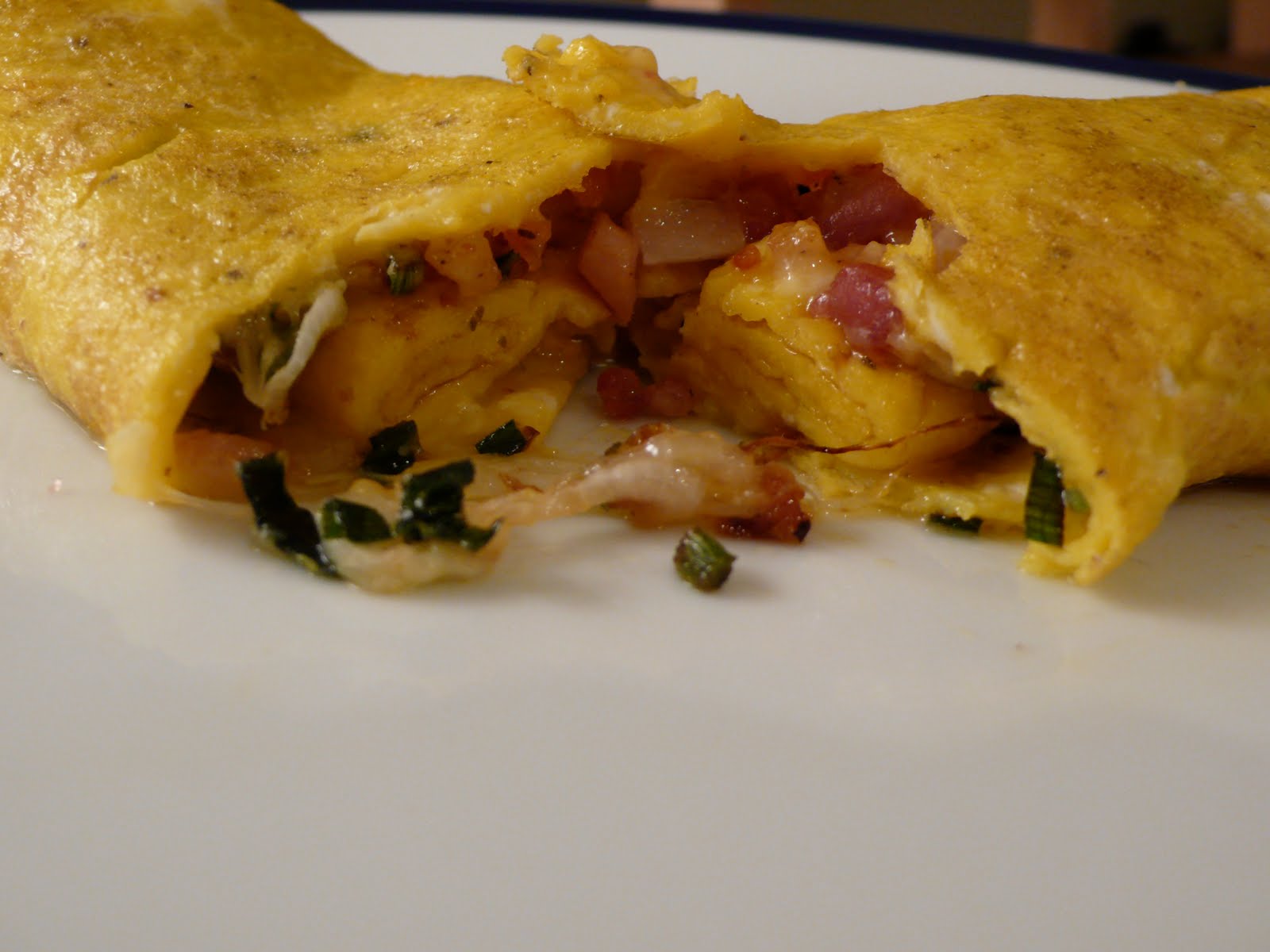
Spring garlic, which is a lot like a scallion but with a garlicky aftertaste, was chopped, sauteed with pancetta, and used to fill an omelette.


No sooner had I made my little dig about bok choy than it showed up on my doorstep, demanding to be transformed into something fabulous. The obvious choice here is an Asian stir fry, but I had hoped to think outside the box. I ended up making a Provencal stir fry...which was not really so imaginative at all, but tasted great all the same. I minced and sauteed garlic scapes (little green hoses with a pungent onion and garlic flavor - very cool) with a bay leaf, fresh thyme leaves, and strips of orange zest, adding in chopped bok choy, tomatoes, olives, and parsley.


And what of the mixed greens and spearmint? They met their end in a garbage bin, for no good reason other than that I wasn't sure off the top of my head how to prepare them and lacked the time and energy to figure it out.

So there you have it. That's what became of my first CSA delivery. I aspire to do better next time; I will endeavor to eat all my vegetables.

Wednesday, May 19, 2010

Take A Chance On Farro


The Viking absolutely loves his cured meats. If left to his own devices he'll eat prosciutto, speck, sopressata, and bresaola by the fistful, munching a saucisson down to the nub for an encore. Watching him return from a Saturday morning bike ride and set upon a few containers of the stuff is really a site to see. He can slurp slices of it down almost like oysters, alternating sheets of cured meat with gulps of a double espresso, barely even stopping to chew. It's like watching a python devour its prey.

And, like the python owner dutifully visiting the pet store for a fresh supply of white mice, so too do I traipse up to the salumi shop every so often to replenish The Viking's cache of cured meats (to be fair, I eat and like them too, they just don't have quite the same primal hold over me that they do him).

Our favorite place to go is Salumeria Rosi on the Upper West Side, which in addition to being a primo source of meats and cheeses is also a damned fine little restaurant. The shop has about 15 seats and a shoe-box of a kitchen from which Cesare Casella, its chef and owner, serves a limited menu of Northern Italian dishes.

We washed up at the Salumeria at the end of last week feeling the way one does on a Friday evening: world-weary and badly in need of a glass of wine. We ordered some of our usual dishes, cavoloni con prosciutto, insalata pontormo, manzo di lucca, but my favorite thing that night was a special -- farro with asparagus, basil, and parsley. It struck that rare and precious balance of feeling indulgent and comforting without being heavy. The flavors were fresh and grassy, the firm grains of farro and taute little disks of asparagus held together in a lightly creamy, cheesy sauce.


Best of all, it seemed like something that I could reasonably expect to recreate at home. I tried to do exactly that on Monday night and served the finished product alongside sea bass. Mine was significantly less creamy (in retrospect I could have cooked the farro risotto-style rather than simmering it in water, which would have helped the creamy factor) but the flavors were there. It not only made a great side dish that night, but we had loads of leftovers that have reheated well for lunches. This whole week I can't help but think about just how wildly underappreciated farro really is: it's like barley only better, yet it has been relegated to second class citizenship while brown rice and quinoa inexplicably get all the attention. If you see farro while you're out shopping (you might have some luck at your local Wholefoods), pick it up and give it a try.


Farro with Asparagus, Basil, and Parsley
Inspired by Salumeria Rosi

Serves 6

1 large or two small shallots, minced
1 bunch asparagus
1 tbsp chopped parsley
3 tbsp chopped basil
3 tbsp butter
1/2 c olive oil
1 lb farro
2 c grated Parmesan

1. Soak farro in cold water and let sit for 25 minutes.
2. Meanwhile, trim and peel asparagus, then thinly slice into 1/8" rounds
3. Drain farro, then transfer to large pot with 2 quarts water; bring to boil, then reduce heat and let simmer for 25 minutes.
4. Heat butter in large skillet over medium heat until it foams.
5. Add shallots and let soften, 2-3 minutes.
6. Add asparagus, kosher salt, and pepper, stir to coat, and cook for 3 minutes more; remove from heat (asparagus should still have some bite).
8. Drain farro then add in olive oil, Parmesan, asparagus, and herbs; add salt and pepper to taste.

Tuesday, May 4, 2010

Rhubarb: It's Celery In Drag


So rhubarb showed up at the greenmarket this weekend. Just a few firm, silty-bottomed stalks of it, but there they were, yanked from the ground on some hilltop in the Hudson Valley, driven into the city, and tossed into a wooden crate next to the baby lettuces and broccoli rabe.

Like the asparagus and ramps that I've lately been so frantic to incorporate into meals at every possible opportunity, rhubarb has its moment here in May/June and then disappears until the following spring. When I see it I can't not buy it, even if I have no clue what I'm going to do with it.

That got me thinking about what I can only call rhubarb's identity crisis.

If you've had any experience with cooking or eating rhubarb, it has probably been in pie, crumble, cobbler, jam, fool, or compote form. Often consorting with strawberries or cherries. You'll admit, this is unusual behavior for a vegetable.

Because, make no mistake, rhubarb is a vegetable. Just look at it! It looks like celery in a red dress and lipstick. Gnaw on a stalk of ripe rhubarb and you'll taste how wholly unfruitlike it really is. People say it's "tart," but that's putting it politely. It's really pretty sour. You're not fooling anyone with that getup, rhubarb. You're a vegetable through and through.

Separate rhubarb from its fruity friends and it makes a great savory ingredient.

So, that's what I decided to do. I returned rhubarb to its rightful place among fellow spring vegetables -- put it back in a pair of 501s and a tee shirt, if you will -- simmering it with onions, garlic, and vinegar, and serving it with a big hunk of a pork chop and a ragout of shiitakes, ramps, and asparagus. This photo is taken instants before The Viking devoured everything in sight, proclaiming the rhubarb chutney in particular to be "actually delicious, far better than it looked to be."


It's true. This condiment isn't going to win any beauty contests (though it might turn out prettier if you start with pinker rhubarb than I did -- my stalks were green and pink), but after all, looks aren't everything. That's something a strawberry would be worried about.


Rhubarb Chutney
From Tom Colicchio's Think Like A Chef

Makes about 1 cup

1 tablespoon peanut oil
1 small onion, peeled, halved and thinly sliced
Kosher salt and freshly ground black pepper
4 stalks rhubarb, sliced about 1" thick
1 tablespoon grated fresh ginger
3 cloves garlic, peeled and sliced
1 bay leaf
2 tablespoons sugar
1/4 cup cider vinegar

1. Heat the oil over medium-low heat in a medium saucepan until it thins slightly. Add the onions, salt and pepper and cook, stirring occasionally, until the onions are soft, about 15 minutes.
2. Add the rhubarb, ginger, garlic, and bay leaf and cook, stirring occasionally, until the rhubarb begins to soften, about 10 minutes. Add the sugar and vinegar and cook until the rhubarb is completely soft and the chutney is the consistency of chunky applesauce, about 7 minutes more.
3. Adjust the seasoning with sugar, salt and pepper. Serve warm or at room temperature.

The chutney will keep in the refrigerator for several weeks.

Saturday, May 1, 2010

Impromptu Badass Omeletteness


Alright, I realize that about half my posts to date involve eggs or yuppy spring vegetables. I promise to branch out, it's just that I randomly made an omelette with sorrel and ramps this morning and uuuhhhh it was amazing.

Ramps, as previously mentioned, are wild leeks. Sorrel is a lemony, leafy herb. If you can't get one of these, use just the other; if you can't get either then use your imagination to come up with another filling. Spinach, onion, I don't know, whatever you can find at the supermarket. If you don't have any imagination, use just the cheddar.

What makes this omelette different than the ones you get in a diner -- besides the fancy produce -- is that it's super thin, almost like a panino, and due to using relatively low heat the eggs are soft and custardy instead of being crispy and dense. Mmmm. Me likey.

Okay, that's all for today. It's 85 and sunny on the terrace and I have a date with a chaise lounge.


Omelette with Sorrel, Olive Oil-Braised Ramps, and Local Cheddar

Serves 1

1/2 c. olive oil
5 ramps, cleaned
1/2 c. coarsely chopped sorrel leaves
2 tbsp butter
1/3 c. shredded cheddar
3 eggs, scrambled
Kosher or Sea salt
Freshly ground black pepper

1. Heat olive oil in small skillet over medium-high heat; once hot, add ramps and coat with oil.
2. Once ramp greens are wilted, reduce heat to low and cook ramps covered, stirring ocassionally, for 5-10 minutes or until very soft.
3. Remove ramps from pan with slotted spoon and transfer to paper towels to drain.
4. Pour off most of the olive oil, then return skillet to medium-low heat.
5. Add sorrel, cooking until just wilted, then remove from skillet with slotted spoon and transfer to paper towels to drain.
6. Coarsely chop ramps add to sorrel, then blot with paper towels to remove as much oil as possible. Set aside.
7. Heat butter over medium heat in a non-stick or cast-iron skillet, spreading butter to cover pan evenly.
8. Once butter begins to foam, add eggs, stirring/scraping eggs towards center with fork or rubber statula.
9. When eggs are cooked almost through, add cheese, then ramps and sorrel, salt, and freshly ground black pepper.
10. Gently detach eggs from pan with spatula (if stubborn, rubber spatulas are gentlest).
11. Using spatula, fold eggs in half and cook for a few moments more.
12. Transfer to plate and season with salt and pepper.

Thursday, April 22, 2010

Baby Steps To Better Time Management


I have this dream.

I'm standing in the kitchen in a black dress, a white apron, and heels. The doorbell rings; I answer it, kiss my guests hello, take their coats. I ask them if they'd like a cocktail and then calmly wander back to the kitchen.

I'm making a vinaigrette, whisk in one hand and champagne flute in the other, now peeking into the oven, now fluffing the salad greens, now sprinkling a little more salt into soup simmering on the stove, all the while discussing nuclear arms control and cracking terribly clever jokes about Dmiti Medvedev.

And then I wake up. Because in fact, this couldn't have less in common with the actual three ring circus that takes place whenever I have guests for dinner.

At 7:55 PM my hair is still in a ball on top of top of my head, I'm wearing boxer shorts and the Viking's "You Don't Have To Be A Plumber To Have Pipes Like These" t-shirt, and I'm covered in driblets of hardened egg, olive oil and flour. Once I wrestle a dress on and take a couple of swipes with a mascara brush, I spend the first hour after company arrives trying desperately to be witty and engaging without losing a finger.

It's a failure of self-discipline, really. The wise cook, when she knows that she will be single-handedly cooking three courses for a half dozen people, chooses only "do-ahead" dishes that won't cause an hour of pre-dinner frenzy. She then plans out a detailed schedule for the day and follows it faithfully.

But I'm not a wise cook, I'm an emotional one, prone to choosing dishes with a romantic disregard for cost, logistics, and my own limitations of skill.

I'm happy to report that this past Saturday, I took baby steps in the right direction. Although I wasn't exactly 100% ready for company to arrive, I succeeded in choosing dishes that could in theory be prepared and set aside an hour or two before dinner.

The main course was a spring lasagna. I'll be the first to admit that it's not a quick meal -- especially if you're making the ricotta and the pasta fresh -- but it can be 100% finished a couple of hours before guests arrive and need only be heated and sliced. It's seasonal and elegant, a fresh take on a frumpy (though beloved) classic.

I served the lasagna rustically (read: sliced frantically into uneven slabs) but if you want to be fancy, cut it into rounds and garnish it with chervil.


Spring Lasagna

Serves 8

1 recipe basic pasta dough, rolled into 3" x 13" sheets or 1 lb lasagna noodles
2 c ricotta (preferably fresh)
4 c stinging nettles
6 c spinach
1 lb ramps, trimmed and coarsely chopped
1 bunch asparagus
6 artichokes, trimmed
4 tbsp butter
4 tbsp flour
2.5 - 3 c milk
2 c grated Parmesan


1. Preheat oven to 400 degrees.

2. Bring 2 quarts of water to a boil in a large stock pot; add spinach and nettles and boil for 1-2 minutes. Drain and cool in an ice bath.

3. Either by hand or in a food processor, coarsely chop nettles and spinach. Set aside.

4. Trim asparagus, peel the stems using a vegetable peeler, and remove the tips. Set aside the stems and tips.

5. Slice artichokes and asparagus into 1/8" slices, using a mandolin if available. Set aside.

6. Heat milk until not quite simmering, in the microwave or on the stove.

7. In a medium saucepan, heat 5 tbsp butter over medium heat. Once melted, add 5 tbsp flour, whisking constantly and cooking until golden brown.

8. Gradually add warm milk, whisking constantly and waiting for sauce to thicken before adding more.

9. Add in the ramps, simmering and stirring occasionally for 4-5 minutes.

10. Fold in spinach and nettles, season with salt and pepper, and remove from heat.

11. Butter a 9 x 13 baking dish and lay down a layer of noodles. Spread with a layer of spinach/nettle mixture, followed by sliced asparagus and artichokes, ricotta, and then Parmesan. Repeat layering three more times.

12. Bake in 400 degree oven for 20 - 30 minutes, then remove from the oven and let rest for 5 minutes.

Sunday, April 11, 2010

An (Almost) Springtime Lunch


I've been looking for the perfect subject for my Very First Blog Post and after three weeks, have resigned myself to the fact that no such opportunity will present itself. But a springtime Sunday lunch chez moi seems like as good an excuse as any for the momentous First Post. After all, spring is about birth, renewal, optimism, yada yada, the moral of the story is that I'm genuinely excited to have something to cook with besides root vegetables and winter squash and I want to show the fruits of my labor to all of you people.

Spring vegetables: I'm talking rhubarb, peas, artichokes, fava beans, asparagus, and ramps (aka wild baby leeks). I try to eat these things only when they are growing locally, which makes the first ones of the season taste just outrageously good. First day without a coat good. First iced coffee good. First day of outdoor drinking good (okay, maybe not quite that good, but close).

Unfortunately I got a little ahead of myself on the spring lunch idea. It's early April in New York and even though the weather has been in the 70s and 80s, the ground is still cold and the Union Square Greenmarket is still largely sans spring veg. On my Friday morning greenmarket outing, I did manage to snag stinging nettles, arugula, and asparagus.

That's right. Stinging nettles. How exciting. It feels awesome and a little bit survivalist to be cooking with these -- really anything that needs to be handled-with-care/devenomed in the kitchen is an immediate hit with me.

Turns out you can do a lot with the stinging nettle: soup, pesto, stuffed pasta filling, pizza or crostini topping...it tastes a lot like spinach, only sweeter. The key thing to keep in mind above all else is -- and forgive me for stating the obvious here -- if you touch them in their raw state with bare skin, they will leave a sting that lasts for a few hours. While not excruciating it's unpleasant and quite the buzz-kill, as I learned last summer when I accidentally romped through a nettle patch barefoot after a couple of cocktails. Oops.

For today's lunch I made a stinging nettle pesto, and tossed it with homemade linguine. I considered doing ravioli and then decided that I might want to post something that's not completely useless to anyone without a pasta machine and access to wild plants. (if you don't have the time/requisite insanity to make pasta from scratch, store bought pasta of any shape will do just fine). Unfortunately, you are not going to be able to find nettles at your local Safeway...but if you come across some, do consider trying out this pesto as a yummy alternative to the traditional basil version.


Stinging Nettle Pesto

Serves 8

6 cups stinging nettles (2 cups cooked)
1/3 cup pine nuts
1/2 cup olive oil
1-2 cloves garlic, minced
1/2 cup grated Parmesan-Reggiano or Pecorino-Romano
Kosher salt
Freshly ground black pepper

1. Put on rubber gloves.

2. Plunge nettles into boiling water for 1 minute, drain, and squeeze dry.

3. Coarsely chop.

4. Add nettles, garlic, pine nuts, salt, pepper, and 2 tbsp olive oil to food
processor and pulse until they form a paste.

5. With food processor running, drizzle the oil into the mixture in a constant stream.

Voila! Pesto. Just like that.


Also on today's menu:

Roast leg of lamb with mint-parsley salsa verde

Roasted asparagus and arugula salad with farm egg, parmesan, and lemon-rosemary vinaigrette

Country bread

Lemon-blueberry bread pudding with vanilla creme anglaise