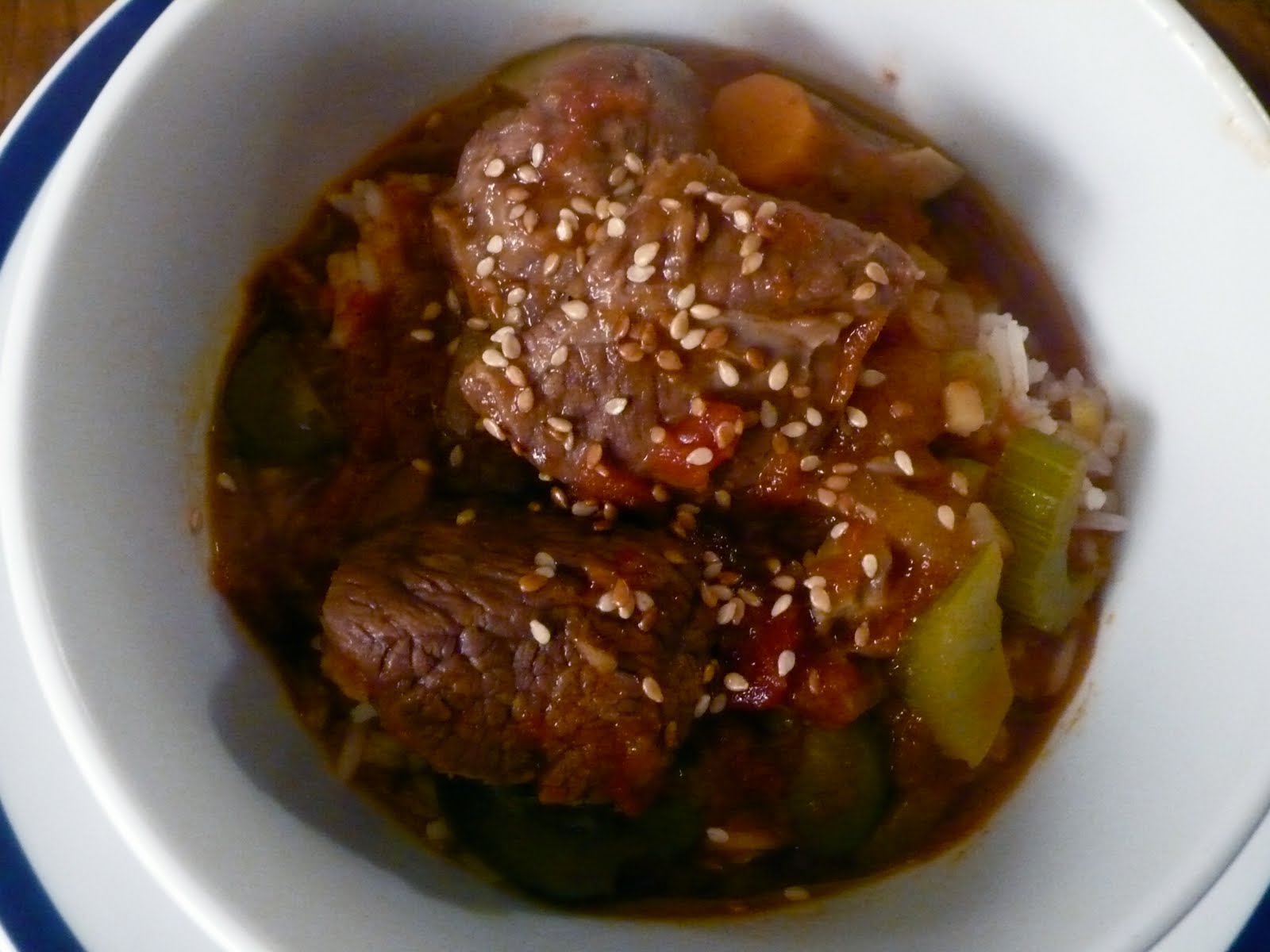
Showing posts with label Moroccan. Show all posts

Wednesday, August 4, 2010

Qu'est-ce Que C'est Dans Ma Boite Du CSA? Summer Squash, Japanese Eggplant, Napa Cabbage, Fava Beans, The List Goes On And On...


This week I found myself in an unfamiliar position: I was actually prepared to use all of my CSA produce -- I had the dishes all planned out! -- and then a lot of it went bad on me.

Food spoilage was a serious, complex problem over most of the course of human history, but the invention of refrigeration around 100 years ago should have changed all that. We live in the golden age of food preservation (actually, maybe the baroque period?). If we can make milk that's shelf-stable for months, I should be able to keep a cucumber fresh for 7-10 days.

And yet, my refrigerator is where vegetables go to be tortured. Earlier this week some of the squash froze to death and some of it appears to have been suffocated in an unventilated Ziploc bag. The cucumbers died of dehydration. Poor old squash and cucumbers.

I think that most of you can relate. When a new fruit or vegetable comes into one's life, it's not always obvious what should be done to keep it happy. Does one put it in the fridge? If so, in a plastic bag? Or in a brown paper bag on the counter? Should one wash it first? And if one is having this much trouble caring for vegetable matter, how can one expect to have a child?

To make matters worse, my refrigerator is unpredictable and mean-spirited. It is the Mel Gibson of kitchen appliances, cruel and volatile, freezing things at random and without warning. It appears to be particularly bigoted against leafy greens. Mel is currently set at 38 degrees and still manages to freeze things, leading me to believe that either the thermostat is a lie or I remember even less from high school chemistry than I thought.

This week of ruined foodstuffs was a wake up call to get my act together. For information about properly storing produce, I found this cheat sheet - it's not the prettiest, but the information is presented concisely and clearly. Were you even aware that certain troublemaking fruits like apricots and tomatoes must be stored separately from the rest of their fruit and vegetable friends? Neither was I.

I also need to get myself a refrigerator thermometer and figure out what parts of my fridge stay at what temperature, and store things accordingly. I can already see The Viking throwing his face in his hands at this, envisioning a future in which he gets in trouble for putting the blueberries back on the wrong shelf. Sorry, The Viking, but it's the world in which you are about to live.

Without further ado, here's a rundown of how I used my CSA produce:

I sliced the Japanese eggplants and what was left of the squash, brushed them with olive oil, and simply grilled them on a griddle plate on my stove top.


I rescued two cucumbers and used them to make raita, the Indian yogurt, cucumber, and mint sauce. This became a cool, refreshing accompaniment to the grilled vegetables.

The carrots were tossed in with a leftover butterflied lamb shank that I thawed, trussed, and braised on the stove top with tomatoes, lemons, garlic, port, cinnamon, thyme, and bay leaves. I've never cooked lamb this way before and it's worthy of a blog entry of its own - it was sensationally tender and delicately tinged with North African flavors.


The fava beans I blanched and threw together with mint, sliced radishes, sliced red onion, and a honey mustard vinaigrette. I meant to include feta, and that would have been a valuable addition to a salad that ended somewhat too flimsy for its own good.


As previously reported, the Mirabelles became a tart.

As for the Napa Cabbage and Kale...these didn't turn out so well. I braised them in a skillet with garlic and onions and finished them with rice vinegar and raz el hanout. It was a dish that didn't make any sense, and the finished product showed it (it's pictured below with leftover lamb and raita).


This week, only the purslane got left behind. I'll try to do better by it next time around.

Wednesday, June 9, 2010

Travels With The Nanny, And Tagine 2.0

The Medina: steamy, colorful, bustling, grimy, with motorbikes persistently zooming along the narrow corridors, full of strange noises and smells and feral cats slinking around dark corners, men clad in djellabas selling everything from leather slippers to metal lanterns to pickled calves heads and clay tagines.

This is Marrakech. Specifically, the walled old city, whose thousand years of history have been left virtually untouched while a new city of sprawling hotels, McDonald's outposts, nightclubs, and the like, has sprung up around it. The Viking and I quickly found that most of the beauty in the Medina was to be found on the other side of unassuming doorways that open onto nameless alleyways. Our hotel, for instance, a charming seven-room riad called L'Orangeraie (riads being the Moroccan equivalent of B&Bs); chic cafes with sweeping views of the city; ancient mosques -- though in Morocco, these are only accessible to Muslims.

In Marrakech we were joined by The Viking's nanny. The Viking is quick to point out that she's his former nanny, as if it's a meaningful distinction. She happens also to be a fluent speaker of Arabic and an expert in all things North African and Middle Eastern, so we couldn't believe our luck when our schedules coordinated to be in Morocco at the same time.

The nanny is a fearsome haggler with local merchants and a formidable navigatrix of the maze of streets that comprise the Medina. She led us expertly to the best spice shops within Marrakech's sprawling tangle of souks, where I giddily bought enough cumin and saffron and the like to last us a year. We noticed that immediately upon joining up with the nanny we were no longer harangued by merchants looking to sell us their wares (or their directions), probably because we didn't look like such boobs anymore.


The nanny also toted us along to some of her favorite restaurants (while steering us clear of the food stalls that all the locals knew were apt to make you ill), so that by the end of our three days I felt that I had seen a cross-section of what Marrakech had to offer...without bringing home a parasite as a souvenir.

Eating around Marrakech affirmed what I already suspected: that in Morocco, the tagine is king (actually, Mohammad VI is king, but the tagine is close). Whether dining cross-legged in a tent in the High Atlas mountains, under the sweltering sun at a cafe in the city square, or bathed in candlelight at a high-end restaurant, we found the same basic repertoire: spiced vegetable salads, couscous with vegetables, and tagines of lamb, goat, or chicken.


If you recall, before we left on our trip I made a tagine from a New York Times recipe as a sort of warm-up exercise. It wasn't far off the mark, but here are some observations:

1. Proper Moroccan tagines can vary from being practically all meat to almost all vegetables; we found that there was always much more meat in the city, and a great quantity and variety of vegetables in the country.
2. No matter where you are, a tagine should have very little liquid left when it's done cooking. Keep it over low heat until the liquid is reduced to almost nothing.
3. A tagine is not traditionally served with/over rice, noodles, couscous, or anything else -- it is eaten on its own, or with bread.

Now that I've done my research, I thought I'd present a tagine redux.

It's important when making a tagine not to over complicate things for yourself. What do I mean by this? Well ideally, get yourself a Berber to make it for you-- that tends to keep things simple. But failing that, remember the main principles and experiment with the details: you're slow-cooking meat and vegetables, with some yummy flavorings mixed in. It's not rocket science.

There are limitless iterations of the tagine theme, and everyone flavors theirs differently. Our Berber in the mountains uses ginger, paprika, black pepper, and cinnamon in his tagines; our housekeeper in Marrakech likes to use ginger, saffron, preserved lemon, and black pepper in hers. The great thing about the Moroccan cuisine is that it's about humble, hearty, flavorful, food, not fussy technique -- that may be why my favorite tagines were the most rustic ones, eaten in a rural setting.

Tagines can be cooked in a pot/pressure cooker or a clay tagine -- I'm banking on you not having a tagine at your disposal, so I'll write the recipe for a pot. If you're using the tagine, all the ingredients should be added at once at the beginning, and then cooked with the lid on over a very low flame for 3-4 hours.


Rustic Tagine

Serves 4

1 lb. goat or lamb meat
1 red onion, chopped
2 tsp ginger
2 tsp paprika
1 tsp cinnamon
1 teaspoon pepper
1/3 c. vegetable oil
Handful of parsley and cilantro sprigs
1 lb. potatoes, peeled and sliced
4 carrots, peeled and chopped
2 tomatoes, peeled and chopped
6 prunes
Kosher salt
1/2 c. peas

1. Find a Berber.
2. If no Berbers are available, follow steps 3 - 8.
3. Place a large pot or pressure cooker over medium heat and add vegetable oil, meat, onion, herbs, and spices.
3. Cook meat until browned all over, 8-10 minutes.
4. Add 3 cups of water, bring to a boil, and reduce to a simmer. Simmer for 90 minutes if using a pot and 40 minutes if using a pressure cooker.
5. Add potatoes, carrots, and prunes, partially cover, and simmer until potatoes and carrots are almost tender and sauce is thick, about 15 minutes.
6. Add peas and tomatoes and cook for five more minutes, adjusting seasoning if necessary.

Monday, June 7, 2010

On Berber Gatorade, And My Questionable Decision To Climb Jbel Toubkal

Our story begins in the mountains.

The Viking and I flew into Morocco late on a Sunday night and were whisked by car up and away into the Atlas mountain range, taking the last part of the journey to our lodge by foot. We awoke on our first morning to this view.


We’re not in Kansas anymore, Toto -- nor Wirral, England, where 36 hours earlier we had watched as two groomsmen in tailcoats wrestled on the floor of a ballroom, smearing each other in cupcake icing (behavior I've come to expect at an English wedding, but that’s a story for another day).

We came to the Atlas to trek. Specifically, to climb the tallest mountain in North Africa -- Jbel Toubkal -- which towered somewhere in the distance at 4,167 meters. This seemed like a great idea while I was sitting in front of the TV with a glass of wine researching vacations.

What follows is an account of our trek to the summit, reconstructed from journal entries, mad ravings/scribblings, and photos.


Day 1

8:30 AM

Standard issue Moroccan breakfast: cereal, homemade yogurt, coffee, hard-boiled eggs, warm bread with jam, honey, and butter. About to merrily stuff it in as “fuel” for day’s hike.


9 AM
We meet our guide, a local Berber named Mohammad Ali, like the boxer. Except this one weighs 130 lbs soaking wet. Armed with walking poles and packs, we begin.


10:30 AM
Oddly, terrain is not gently rolling hills and breezy meadows full of wildflowers as was the case in my imaginary Moroccan mountain dreamworld. More vertical, rocky, dusty, unpleasant. Note: Mohammad may actually be mountain goat disguised as human male. Not humanly possible to scamper up mountains so fast.


12 PM

Exhausting morning's hike made almost worthwhile by tasty Berber-cooked lunch at finish: salad of vegetables and tuna, fresh bread, spiced lamb with rice, mint tea. Snooze in shade. Things looking up.


2 PM
Viking and I ineptly zig and zag our way down craggy, shale-covered, nearly vertical face of hillside like novice skiers on black diamond. Meanwhile: Mohammad up ahead, skipping down said hillside in velcro Tiva sandals, wailing Berber mountain songs, twirling his walking stick. Show-off.


4 PM

We arrive at lodge, which is much nicer than anticipated and features hot water, electricity, cozy fire, killer view. We dine on delicious meal cooked by Berber housekeeper: chicken tagine with olives, melon, mint tea. I let Viking win at Scrabble twice.


Day 2

9 AM
Mohammad has changed from Tiva sandals to full-on hiking boots; in retrospect, I should have realized what was about to happen, sat down, refused to move from lodge.


11 AM
Mohammad would make a world-class marathoner if you could convince him to do something so boring as run 26 flat miles. It’s worth noting that he is a pack a day smoker, the final word in all future arguments re: me having the occasional cigarette.


2 PM

On switchbacks climbing last 900 meters to today’s peak, racing to get to camp before bad weather hits. 60 MPH winds not what I meant when wishing for "cooling breeze." I can't feel my legs. Thinking: If I ever get off this mountain, I'm going to start eating a lot more bacon.


2:30 PM
Two things keep happening to deflate my sense of accomplishment: 1) Mohammad’s insistence on calling this a “nice walk,” instead of what it is, a death march to the apex of Mt. Hell, and 2) occasionally rounding bend on windswept, Godforsaken mountainside and running into small boy toddling along after village goats.


3 PM

Heroic shot of me and Mohammad braving ice field at 3,900 meters. Not pictured: me sobbing in exhaustion-induced hysterics and screaming against wind, “I fucking hate this fucking mountain.”


4:30 PM
We arrive to base of final Toubkal ascent, at what looks like post-apocalyptic French refugee camp but is actually lodge for backpackers – most European. I am exhausted, teary, dirty, dehydrated, hungry. It’s 35 degrees and I’ve just learned that we’ll be sleeping in a tent.


7 PM

Mostly back in one piece thanks to hot shower, mint tea, warm clothes, and Berber-cooked dinner of vegetable soup and goat tagine. I highly recommend finding yourself a Berber, they are awfully good at making tagines. Recipe to follow in subsequent post.


9 PM
Mohammad reports that he has climbed Toubkal 459 times without losing anyone. That’s a safety record that even my mother, great Consumer Reports disciple, could get behind.


Day 3

5:45 AM

The last time I saw the sun rise I had a bottle of Veuve in one hand and an Ambien in the other.


8:30 AM

After two hours of climbing, just 150 meters from the summit. It's as cold as it looks.


9:00 AM

Victory! We reach summit; moment of pride and accomplishment overshadowed by intense desire to get out of cold and wind and down from high place.


*******

And now for the actual cooking part -- since this is, after all, a cooking blog.

It would be hard to overstate the prominence of mint tea in the Berber diet. They drink it constantly, like water (the water quality is very poor so tea serves as a safe substitute), to socialize, as a digestive, as a snack. The Berbers make mint tea from green tea and fresh mint leaves(wild mint grows all over the lower mountains – you catch whiffs of it periodically as you’re climbing along), and a load of sugar. The traditional preparation is very, very sweet, which makes it a perfect drink for hiking.

The Berbers refer to mint tea as “Berber Whisky” -- after all, they are Muslim, so do not drink alcohol -- which makes me sad because only someone who had never had whisky would call it that. No, mint tea is more like Berber Gatorade. It’s just the kind of glucose bomb that’s perfect for fueling a couple of hours on a mountain.

It’s really delicious, perfect at tea time or after dinner, and if you can't justify the major sugar high you can always alter the sugar content accordingly.


Berber Mint Tea

Serves 2

1 tbsp loose leaf green tea, or 1 tea bag
1 large stalk mint
Sugar

1. Add green tea and mint to small teapot (if green tea is loose, put in an infuser).
2. In a medium saucepan, bring 1 quart water to a boil.
3. Remove boiling water from heat and pour into teapot.
4. Steep for 3 minutes; serve.
5. Sweeten to taste (approximately 2 tablespoons per cup for authentic mint tea).

Thursday, May 13, 2010

Are You There Eyjafjallajokull? It's Me, Liz


At the moment, I find myself in the somewhat awkward and primitive position of praying to a volcano. I imagine that people have been doing this in Iceland for a thousand years, although for the most part it has probably involved virgin sacrifice and an entreaty to spare flocks of sheep from a sea of molten lava. Well I don't have any virgins to offer, but all I want is for the volcano to leave my vaca alone.

In exactly one week, I am scheduled to travel via London to Morocco for ten days of pure enjoyment. I have been looking forward to this for months. In some sense I have been looking forward to it since November 31, 2007, when I returned from Argentina -- that was the last time that I took a whole week off from work and ventured somewhere new in the world.

Here's the plan: three days in the UK for a full-throttle English wedding, four days trekking in Morocco's Atlas mountains, and then three days in Marrekech to spend at spice markets and souks, getting hammam treatments, eating street food, and sunbathing. Yeah, so it's a pretty nice vacation that we lined up for ourselves.

Unfortunately, as I write this, there's a big, angry plume of volcanic ash drifting around up there, and whether or not my trip actually happens depends -- literally -- on which way the wind blows and how long the erruption lasts. The only ash cloud I've ever worried about up until now is the one circling my head when I'm trying to sneak a cigarette, but I've become obsessed with this thing: tracking its movements, researching prevailing seasonal wind patterns, checking up on airport-by-airport flight disruptions.

Everyone keeps reminding me that there's nothing I can do about it, so I might as well just relax. "Relax" isn't in my vocabulary, but it translates most closely to "make a stew."

In honor of the (hopefully) impending trip, I decided to make a tagine.

A tagine is a Morrocan stew (as well as the name of the vessel that you use to cook it in). There are countless variations, but they tend to feature a handful of the following: olives, apricots, apples, raisins, dates, almonds, fresh or preserved lemons, orange, lamb, chicken, honey, and spices including cinnamon, saffron, ginger, turmeric, cumin, paprika, and/or the King of all North African spice blends, Ras El Hanout.


I absolutely love a good stew: they're warm, comforting, filling, and fun to make. A stew is just enough work to make you feel like you've accomplished something but not enough to make you regret starting it in the first place. Here's the general formula:

-Chopping things, like meat, celery, carrots, onions;
-Browning meat on the stovetop (a critical step for anything that's going to cook slowly in liquid
it gives the meat that rich roasted flavor);
-Dumping liquids and spices into a pot, cracking open a bottle of wine, and giving the simmering mixture an occassional stir, sniff, and taste.


Once your stew is done, you have a one-pot meal with loads of leftovers that will taste even better in a day or two once the flavors have had a chance to meld. Stews also freeze beautifully, especially if you put them away the same night they're made.

I got this particular tagine recipe from the New York Times and found it to be flavorful, lean, and easy to prepare. It does require buying lots of spices, especially if you don't have a good collection to start with, but once you have those on hand your second, third, and fourth tagine will be dramatically less pricey to buy for. In terms of equipment: I don't have an actual tagine (in a New York City apartment? Please.), but an enameled cast-iron pot works just as well. If you don't have that, then an oven-proof 5 quart pot will fit the bill.

If Eyjafjallajokull cooperates, hopefully this will be the first of many Morrocan-themed posts to come. Keep your fingers crossed.


Lamb Tagine With Green Olives

From The New York Times, April 5 2010

Serves 4

For the spice mixture:
3/4 teaspoon ground coriander
1/2 teaspoon ground cumin
1/8 teaspoon cinnamon
1/2 teaspoon paprika
Generous pinch cayenne
Pinch saffron

For the tagine:
1/4 cup extra-virgin olive oil
2 pounds lamb stew meat, cut into chunks
1/2 teaspoon salt
1/4 teaspoon pepper
1 medium onion, sliced into medium-width pieces (about 1 cup)
1 clove garlic, peeled
1 tablespoon diced, fresh ginger (from about 1 inch)
Juice of 1 orange
1 14-ounce can diced or chopped tomatoes
1 2-inch-long piece of orange peel
2 cups chicken broth
1 teaspoon honey
1 medium carrot, sliced ½-inch thick (about 1 cup)
1 celery rib, sliced ½-inch thick (about 1 cup)
1/4 cup sliced almonds
1½ tablespoons sesame seeds 8 green olives, sliced into quarters (about 1/4 cup)

For the citrus rice:
1½ cups basmati rice, rinsed 3 times
1 bay leaf, preferably fresh
Grated zest of 1 lemon
Pinch of salt
1/4 teaspoon red-pepper flakes
1 tablespoon unsalted butter
Juice of 1 lemon
1 orange, sectioned and chopped (about ¼ cup)
2 scallions, sliced

1. Make the spice mixture by stirring together the spices in a small bowl. Preheat the oven to 350 degrees.
2. In a large, ovenproof stew pot or tagine, heat the oil over medium-high heat. Season the lamb all over with salt and pepper. Add the meat to the pot and stir to coat in the oil. Brown for about 5 minutes, stirring occasionally to make sure the meat browns evenly on all sides. Transfer the meat to a bowl and set it aside.
3. Lower the heat to medium and add the onion, stirring to coat. Sauté for about a minute, until it begins to soften. Add the garlic and ginger and add the meat back to the pot. Stir everything together. Squeeze the orange juice into the pot and mix well. Add the tomatoes, orange peel, spice mixture, chicken broth and honey. Mix well. Raise the heat to medium-high and bring the mixture to a simmer, then cover the pot and put it in the oven. Cook for 1 hour or until the meat is about half-cooked.
4. Stir in the carrots and celery and return the pot to the oven. Cook for another 30 to 45 minutes, until the sauce is thick and reduced and the lamb is tender.
5. While the tagine is in the oven, toast the almonds and the sesame seeds in a small pan over low heat until the nuts are golden, about 5 minutes, stirring regularly to make sure the almonds don’t burn.
6. About 15 minutes before the tagine is finished, make the citrus rice: Put the rice and 2 cups of water in a large pot set over high heat. Add the bay leaf, lemon zest, salt, red-pepper flakes and butter. When the water boils, lower the heat and cover the pot with a tight-fitting lid. Continue to simmer until the liquid has been absorbed, about 12 minutes. Turn off the heat. Add the lemon juice, orange pieces and scallions and mix well. Transfer to a large bowl and serve immediately.
7. Remove the garlic clove and orange peel from the tagine. Add the olives and spoon the tagine onto a large serving plate. Sprinkle the almonds and sesame seeds on top. Serve immediately, with citrus rice.